What Does the Future of the Croatian Property Market Look Like?
The Croatian property market has gone through a period of strong price growth in recent years. At the same time, something that may seem contradictory is happening: property prices continue to rise while the number of transactions is falling.
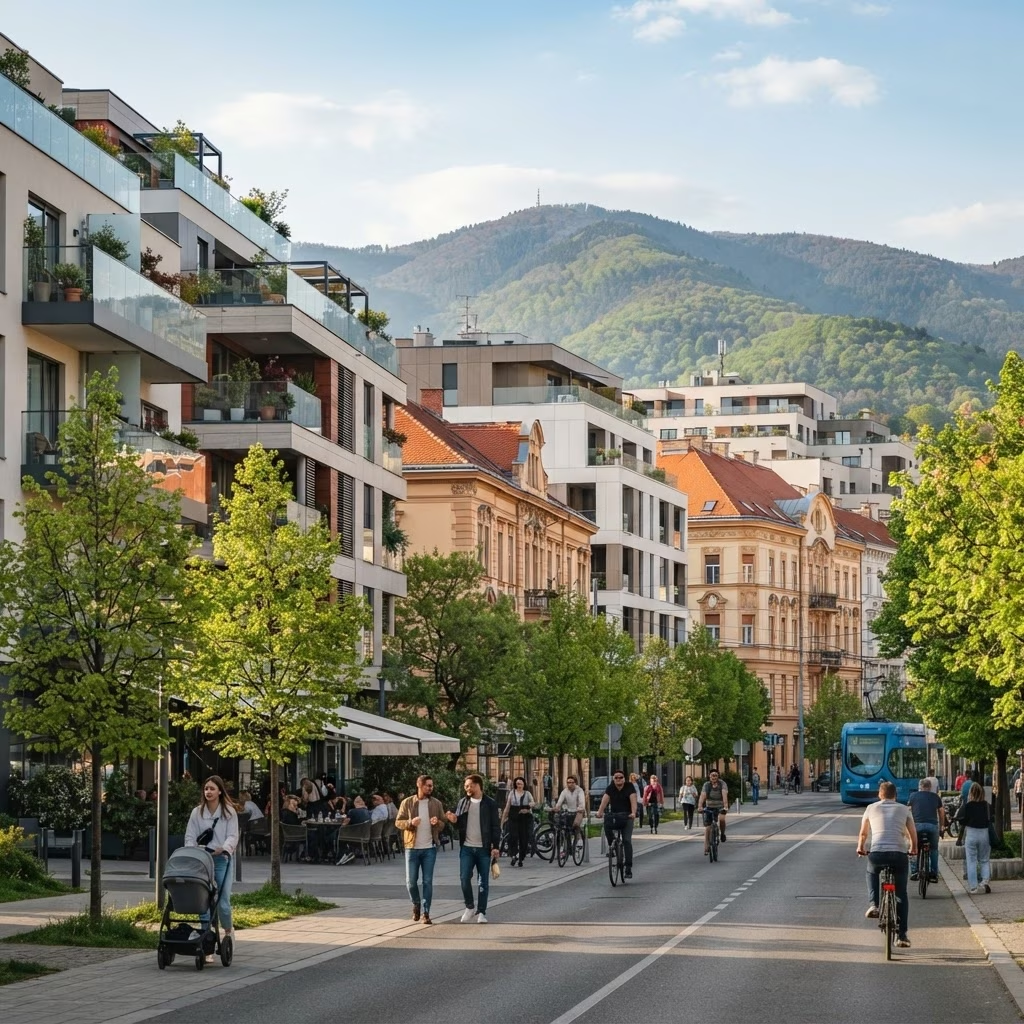
According to the Croatian Bureau of Statistics, residential property prices in the first quarter of 2026 were 14.3% higher than in the same period a year earlier. At the same time, the number of residential properties sold was 42.2% lower than a year earlier.
This suggests that the future of the market is unlikely to be simply a question of whether prices will rise or fall. A more interesting question is how the market will change and which properties, locations and types of housing will attract the strongest demand.
A market with fewer transactions but still high prices
One of the most important trends that could shape the coming years is the growing separation between prices and market activity.
High prices are already putting properties out of reach for some potential buyers. At the same time, owners of desirable properties may not be under significant pressure to sell. The result can be a market with fewer transactions but relatively resilient prices.
The data for 2026 already points in this direction. In the first quarter, prices of existing residential properties were 16.1% higher than a year earlier, while the number of existing properties sold fell by 37.4%.
This does not mean that prices will necessarily continue to rise at the same pace. As properties become less affordable, the market may gradually adjust through slower price growth, greater room for negotiation and longer selling periods.
Supply will be one of the key factors
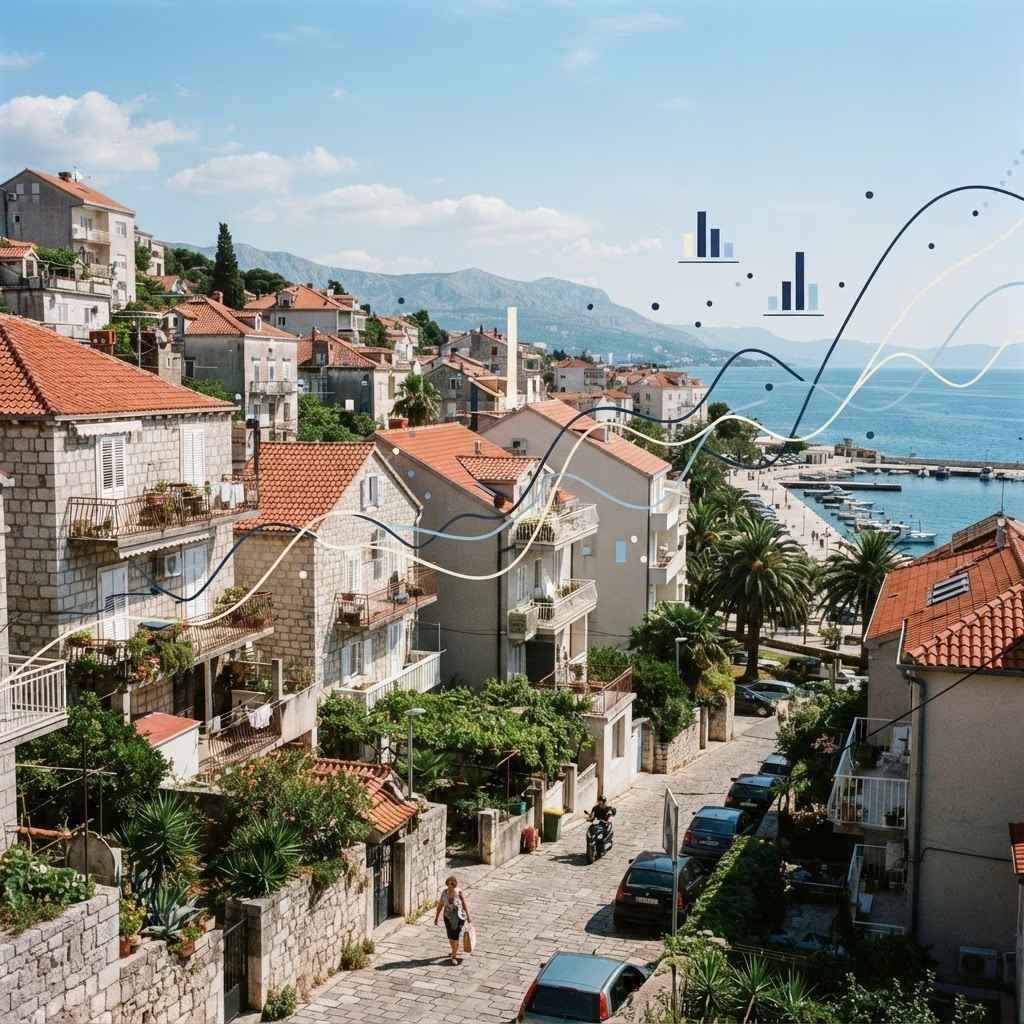
One of the biggest questions for the future of Croatian housing is how many new homes will be built – and where.
In the first seven months of 2026, 6,055 building permits were issued, 12.1% fewer than in the same period of 2025. The permits issued during that period covered plans for 10,439 new residential units.
At the same time, construction costs remain an important factor. The average price of newly built dwellings sold in the first half of 2026 was 8.9% higher than in the same period of 2025. The average price of new dwellings sold by companies and other legal entities was €3,012 per square metre.
Increasing supply is therefore not simply a matter of building more apartments. New housing also needs to be affordable enough for buyers while remaining financially viable for developers.
The relationship between construction costs, land prices, regulation, financing conditions and household purchasing power will be one of the defining factors of the future market.
Will the way we live change?
The future property market will not be shaped by prices alone. People's housing needs will also evolve.
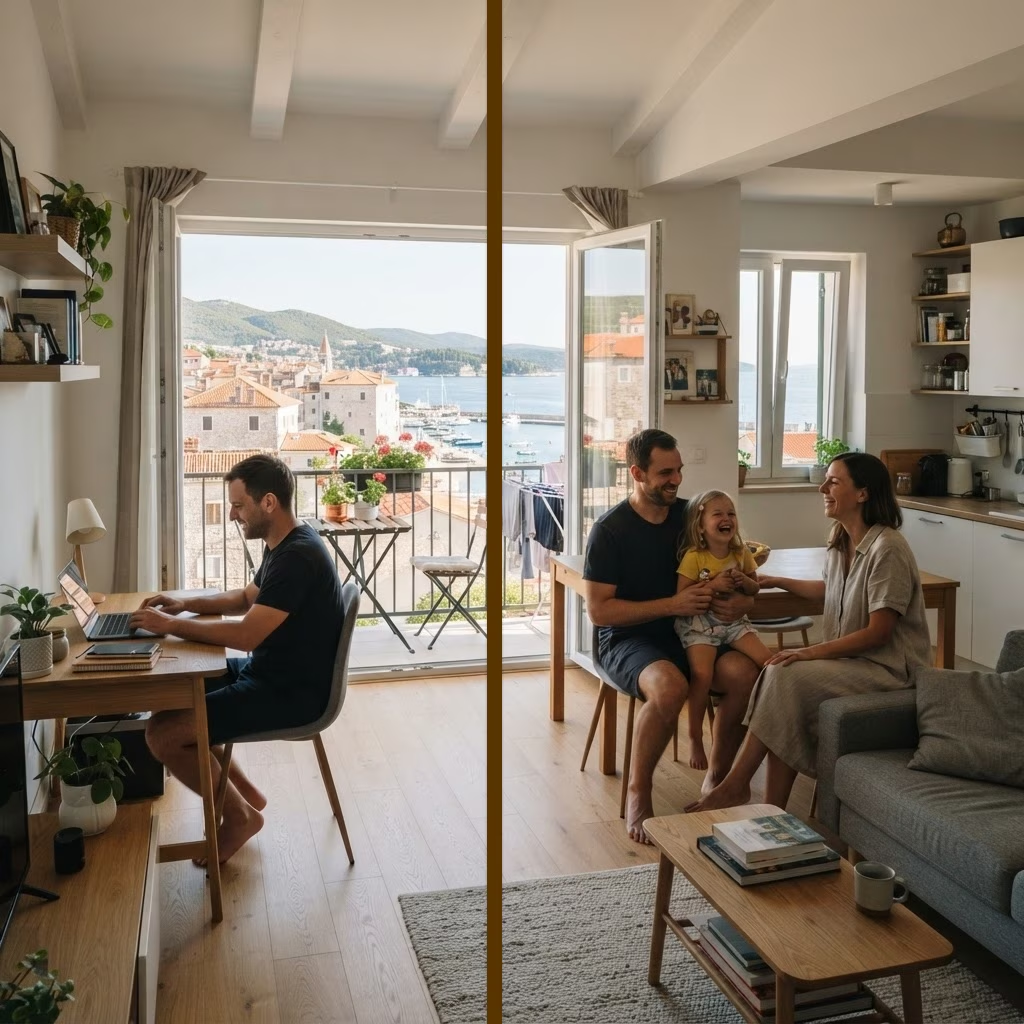
Remote work has already changed how some buyers think about location. Being close to the city centre is no longer the only consideration. Additional space, a balcony or terrace, green areas, parking, good infrastructure and convenient connections can all become more important.
This could create opportunities for locations that were previously less sought after.
Demographic changes may also increase demand for smaller, functional homes, as well as better-quality housing adapted to an ageing population.
In other words, the future market will be about more than how much a square metre costs. It will also be about what buyers get for that square metre.
Long-term rental could become more important
One of the issues likely to influence the Croatian property market significantly is the relationship between short-term and long-term rental.
Croatia has developed a strong tourism rental market, particularly along the Adriatic coast. At the same time, there is a growing need for homes that are available to people who live and work in these areas throughout the year.
Croatia's National Housing Policy Plan to 2030 specifically identifies increasing the supply of housing, activating vacant homes and creating more secure long-term rental options among its objectives. It also includes measures related to regulating short-term rentals.
If these measures continue to be implemented, the rental market could gradually change. A property that is currently primarily attractive as a tourist rental could gain additional value as part of the long-term housing supply.
More attention to vacant properties and the existing housing stock
The future of the market will not depend solely on new construction.
Croatia's National Housing Policy Plan identifies a significant unused housing stock and includes measures aimed at activating vacant properties and increasing the supply of affordable housing.
This is important because solving Croatia's housing challenges may not depend entirely on constructing new buildings. Part of the solution could also be making better use of existing homes through renovation, conversion and bringing vacant properties back onto the market.
This could be particularly relevant in cities where the availability of new development land is limited.
Location will still matter – but perhaps differently
It is difficult to imagine location becoming less important. However, the definition of a “good location” may continue to change.
In Zagreb, connectivity, infrastructure and access to services will remain important. On the coast, demand will continue to be influenced by tourism, but also by people who want to live there throughout the year.
In smaller cities and suburban areas, access to larger urban centres, more living space and overall quality of life could become increasingly important.
The Croatian property market could therefore become even more fragmented. Instead of thinking about one national property market, we may increasingly need to think about a collection of local markets with very different conditions.
What will happen to property prices?
The easiest way to frame the future is to ask: will prices fall?
But the market is much more complex than that.
Prices will be influenced by the supply of new homes, construction costs, interest rates, household incomes, demographics, tourism, rental regulation and the availability of land.
The European Central Bank notes that residential property markets are sensitive to changes in interest rates, economic conditions and energy costs, while housing supply in parts of the euro area has not kept pace with demand.
This makes it more realistic to expect different parts of the Croatian market to develop at different speeds. Attractive properties in highly sought-after locations may remain expensive, while properties in less desirable locations, poorer condition or with less attractive characteristics may face greater pressure on prices.
The market will become more data-driven
Another change is already visible: buyers have access to more information than ever before.
Price, time on the market, the number of comparable properties, location, building characteristics and previous price changes are increasingly relevant when making a decision.
As more data becomes available, buyer expectations will also change. It may become increasingly difficult to justify a high asking price simply by describing a property as being “in a good location”. Buyers will increasingly compare what they can get for their budget across different locations and property types.

The future will not be the same for every property
The Croatian property market is likely entering a period in which quality, location and the actual usefulness of a property will matter more than ever.
After years of strong price growth, the market will need to adapt to the fact that many buyers can no longer keep up with the previous pace of increases. At the same time, limited supply in desirable locations, high construction costs and demand for quality housing can continue to support high prices.
The future of the Croatian property market is therefore unlikely to be defined by one major trend affecting the entire country. Instead, it will increasingly be about differences between locations, property types and the needs of buyers.
One thing is certain: the market will change. The question will no longer be only how much a square metre is worth, but what kind of life, location and quality of housing that square metre can offer in the years ahead.
Explore the market on Loko
On Loko, you can explore properties across Croatia and compare them by price, size, location and other characteristics. As the market changes, comparing the available supply can help you understand what is currently being offered in different locations.