How to Estimate the Value of a Property
How much is a house or apartment actually worth? This is one of the most important questions for both property buyers and sellers.

Sellers want to set a price that reflects the market, while buyers want to know whether they're paying a fair price or whether the asking price is too high. Although an accurate valuation can be carried out by a qualified property valuer, you can make an initial estimate of a property's market value by comparing it with similar properties and analysing several key factors.
Here's what you should take into account.
1. Start with the Location
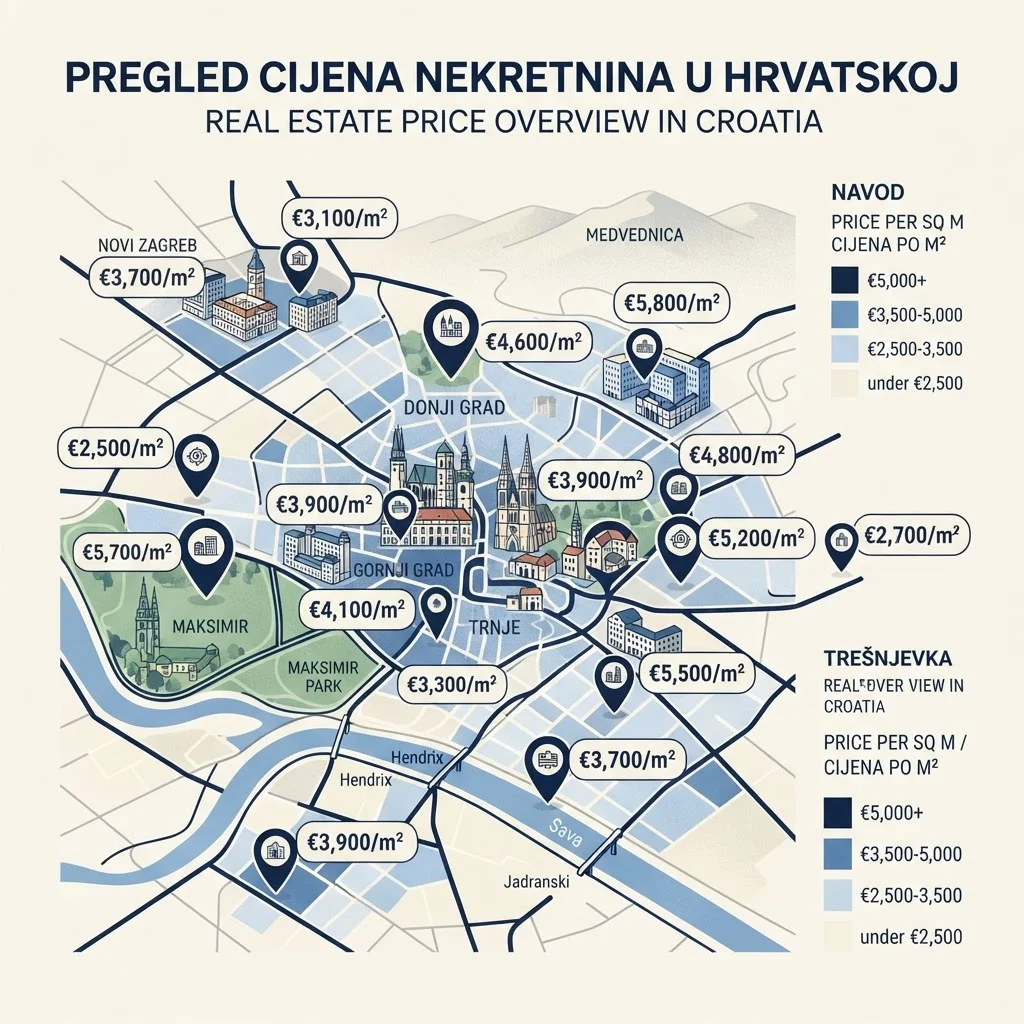
Location is one of the most important factors determining the value of a property.
Simply comparing apartment prices across an entire city isn't enough. Differences between individual neighbourhoods—and even neighbouring streets—can be significant.
Property values can be influenced by:
proximity to the city centre
public transport
schools and childcare facilities
shops and other amenities
parks and green spaces
traffic and noise levels
proximity to the sea
views and the immediate surroundings.
For this reason, you should primarily compare a property with others in the same or a very similar micro-location.
2. Compare Similar Properties
One of the simplest ways to make an initial estimate of a property's value is to compare it with current listings.
Look for several properties with similar:
locations
floor areas
numbers of rooms
years of construction
conditions
floor levels
additional features.
For example, if most comparable apartments in the same part of the city are advertised at between €3,000 and €3,300 per square metre, this gives you a useful starting range for your valuation.
However, remember that prices shown in property listings are asking prices, not necessarily the prices at which properties are ultimately sold.
3. Price per Square Metre Doesn't Tell the Whole Story
The average price per square metre is a useful indicator, but it doesn't provide the full picture.
Two 70 m² apartments on the same street can have significantly different values.
The price can be affected by features such as:
a parking space or garage
a balcony
a terrace
an elevator
the view
orientation
storage space
the quality of the interior
the property's energy rating.
For this reason, use the average price per square metre as a starting point rather than as a final valuation.
4. Assess the Condition of the Property
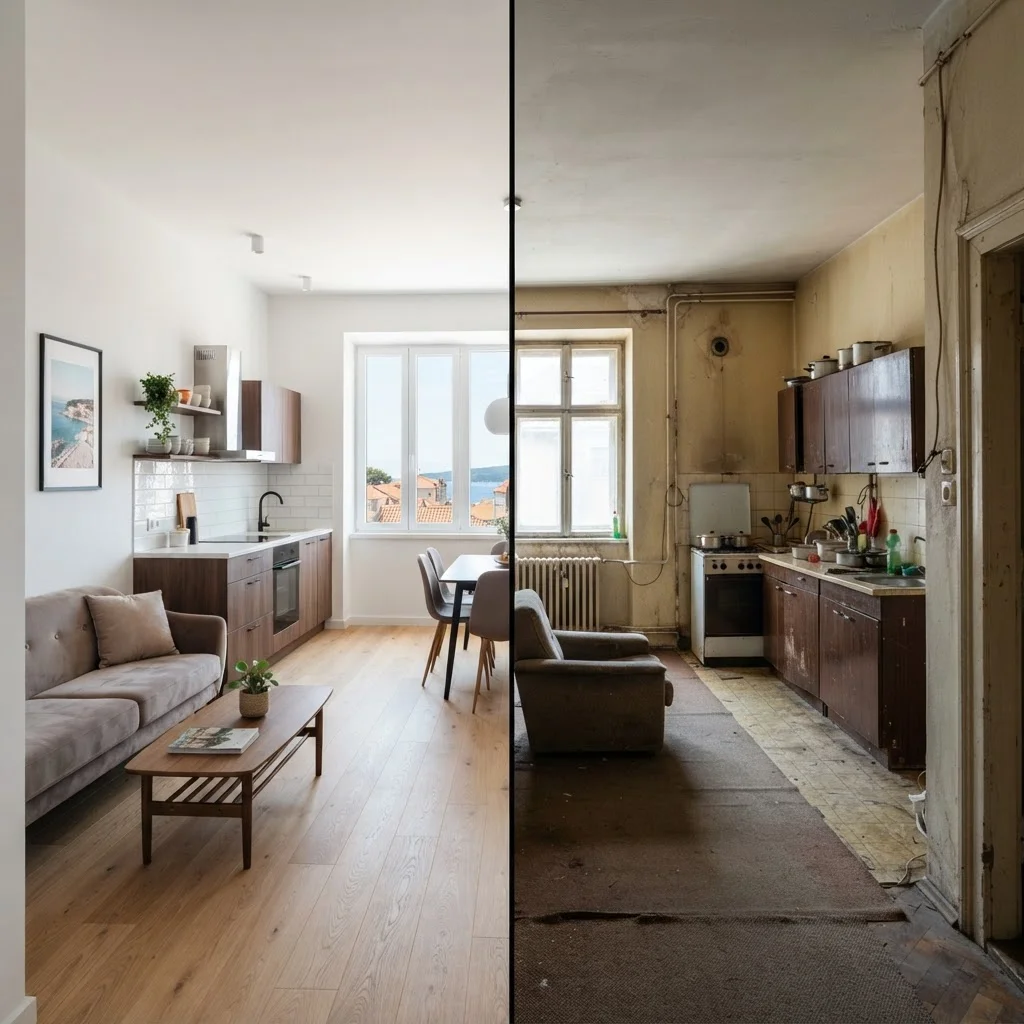
The condition of a property directly affects how much a buyer may be willing to pay.
A fully renovated apartment and one requiring a complete renovation shouldn't have the same value, even if they're located in the same building.
Check the condition of:
electrical installations
plumbing
flooring
windows and doors
the bathroom
the kitchen
heating and cooling systems.
If renovation is required, the estimated cost of the work should be taken into account when assessing the property's value.
5. Don't Forget the Condition of the Building
When assessing an apartment, what lies beyond its four walls matters too.
The value of the property may also depend on the overall condition of the building.
Pay attention to:
the façade
the roof
the elevator
staircases and common areas
shared utility systems
energy-efficiency improvements
the monthly building maintenance fee
any major planned works.
A renovated apartment in a building that is about to require major repairs could come with significant additional costs that should be factored into your assessment.
6. Floor Level, Orientation, and Layout Also Affect Value
Apartments of the same size in the same building don't necessarily have the same value.
An apartment with plenty of natural light, a functional layout, and an attractive view may be more appealing to buyers than an apartment of the same size with a less practical floor plan.
When estimating value, consider:
which floor the apartment is on
whether the building has an elevator
the orientation of the rooms
the amount of natural light
how functional the layout is
the view
privacy.
For apartments on higher floors, elevator access can be particularly important, while buyers considering ground-floor properties may pay closer attention to privacy and security.
7. Parking Can Make a Significant Difference
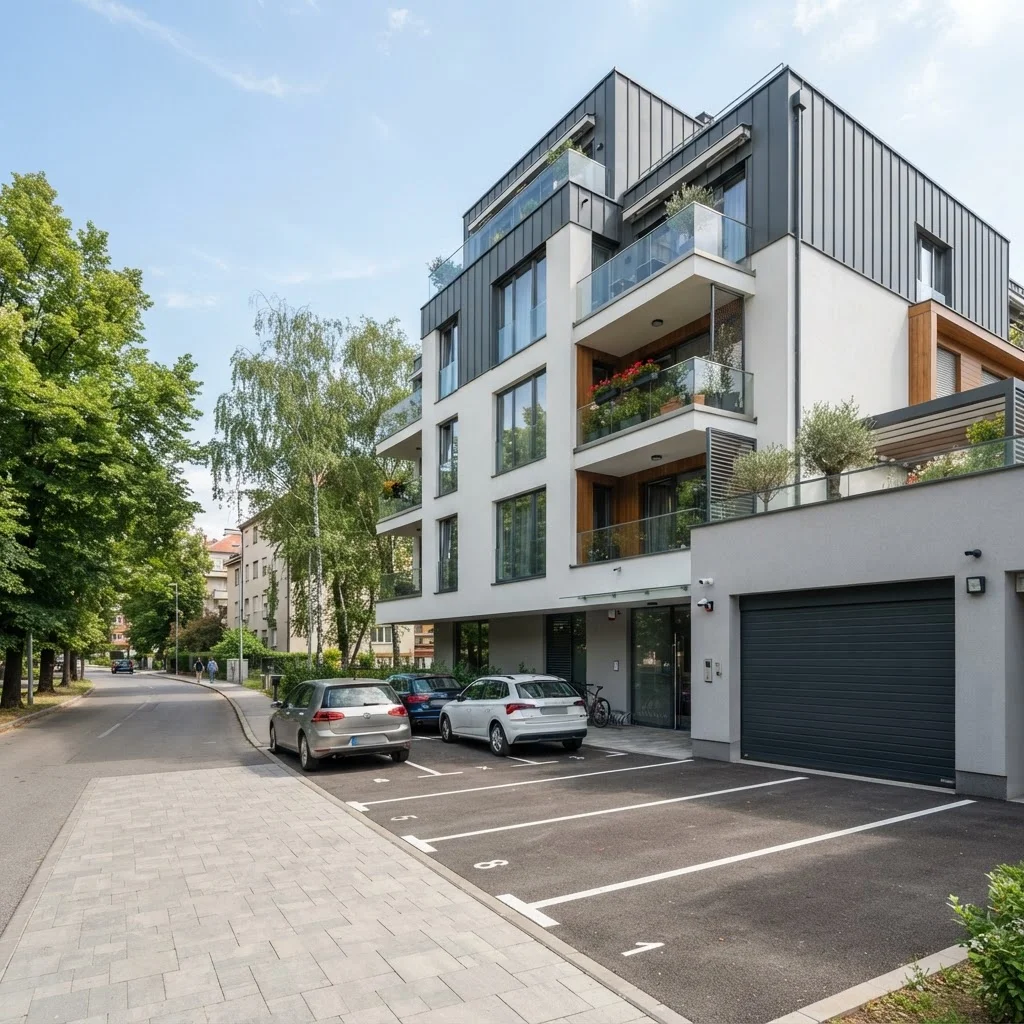
In areas where parking is difficult to find, a private parking space or garage can significantly increase a property's appeal.
Check whether the property includes:
a private garage
a parking space in a garage
an outdoor parking space
shared building parking
access to public parking.
It's also important to verify the legal status of the parking space and whether it's actually included in the ownership of the property.
8. Consider the Future Potential of the Location
A property's value isn't determined solely by what the surrounding area looks like today.
Future development can have a significant impact on the long-term attractiveness of a location.
Research whether there are plans nearby for:
new roads
public transport
schools and childcare facilities
business districts
shops and other amenities
parks and public spaces
new residential developments.
Improved infrastructure can make an area more attractive, while certain projects may have the opposite effect—for example, if they increase traffic or noise.
9. Understand the Difference Between Asking Price, Market Value, and Appraised Value
When estimating a property's value, it's useful to distinguish between several different terms.
The asking price is the amount the seller advertises the property for.
The market value represents the estimated amount a buyer may be willing to pay under current market conditions.
The appraised value may be determined through a formal valuation carried out by a qualified property valuer, for example when a bank requires a valuation before approving a mortgage.
These figures don't necessarily have to be the same.
An apartment may be listed for €300,000, while comparable properties and a professional valuation may indicate a lower market value.
10. When Should You Get a Professional Valuation?
Your own market research can provide a useful starting point, but there are situations where a professional valuation may be necessary.
This can be particularly useful if:
you're buying a property with a mortgage
you're selling a property that's difficult to compare with other listings
you're purchasing land or a specialised type of property
the property requires significant investment
there are major differences between the available market data.
A qualified property valuer can carry out a more detailed assessment of the property, its documentation, location, and comparable transactions.
How to Make a Quick Initial Estimate
If you want to get an initial idea of a property's value, start by finding several comparable listings.
For example, find five to ten properties in a similar location and compare their asking prices per square metre.
Then consider the differences between them.
Has the property been renovated? Does it have a garage? Is it on a more desirable floor? Does it have a balcony or terrace? What condition is the building in?
The more similar the properties you're comparing are, the more useful your initial estimate will be.
Conclusion
Estimating a property's value isn't simply a matter of multiplying its floor area by the average price per square metre.
Location, the condition of the property and building, parking, orientation, floor level, layout, and additional features all contribute to determining how much a property may be worth on the market.
If you're buying, a good valuation can help you determine whether the asking price is reasonable. If you're selling, it can help you set a price that reflects current market conditions.
On Loko, you can compare current property listings from across Croatia and explore asking prices for similar properties based on location, size, and other characteristics. This type of comparison can be a useful first step towards making a more realistic estimate of a property's value.
Note: Prices shown in property listings represent sellers' asking prices and may differ from the final transaction prices. For an official property valuation, you should consult a qualified professional.