Buying Property for Long-Term or Tourist Rental – Which Should You Choose?
Buying a property as an investment often starts with a simple question: is it better to rent it to a long-term tenant or to tourists?

At first glance, tourist rental can seem more attractive because the nightly rate can be significantly higher. Long-term rental, on the other hand, usually offers more predictable income and requires less day-to-day involvement. The two models differ in almost every other respect as well – from location and property type to costs, occupancy, maintenance and the amount of time an owner needs to invest.
That is why the decision should not start with “How much could I earn?”, but with a broader question:
“Which rental model makes the most sense for this particular property and for the way I want to invest?”
Long-term rental: stability first
With a long-term rental, the owner rents the property to a tenant for an extended period, usually in exchange for a monthly rent. This makes income easier to forecast, particularly in locations with consistent demand for housing.
The main advantage is simplicity. Once a reliable tenant has been found, the owner does not need to continuously manage bookings, communicate with multiple guests, arrange frequent cleaning or adjust nightly prices.
That does not mean long-term rental is completely passive. Owners still need to budget for maintenance, repairs and periods between tenants, while there is also the possibility of late payments or other issues with a tenancy.
However, for someone looking for more predictable income with less day-to-day involvement, long-term rental can be a natural choice.
Tourist rental: greater potential, but more work
Tourist rental operates differently. Instead of one tenant, the property is rented to multiple guests throughout the year, with income depending on the nightly rate and occupancy.
This creates the potential for higher revenue in attractive tourist destinations, particularly during the peak season. But a higher nightly rate does not automatically translate into higher overall profitability.
Tourist rental can involve a range of additional activities and costs: guest communication, bookings, cleaning, linen, maintenance, pricing, marketing and dealing with problems during a stay. Owners who use a professional property manager can reduce the workload, but management fees then become part of the cost structure.
Income can also vary considerably throughout the year.
Croatia's tourism market remains substantial. During the first seven months of 2026, commercial accommodation recorded 51.2 million tourist nights, 0.8% more than during the same period of 2025. Monthly figures also demonstrate how strongly demand can vary throughout the year.
For this reason, tourist rental should be evaluated based on annual occupancy and total annual income, rather than simply looking at the nightly rate during July and August.
Location can determine the rental model
The same property can be highly suitable for one rental model and much less suitable for another.
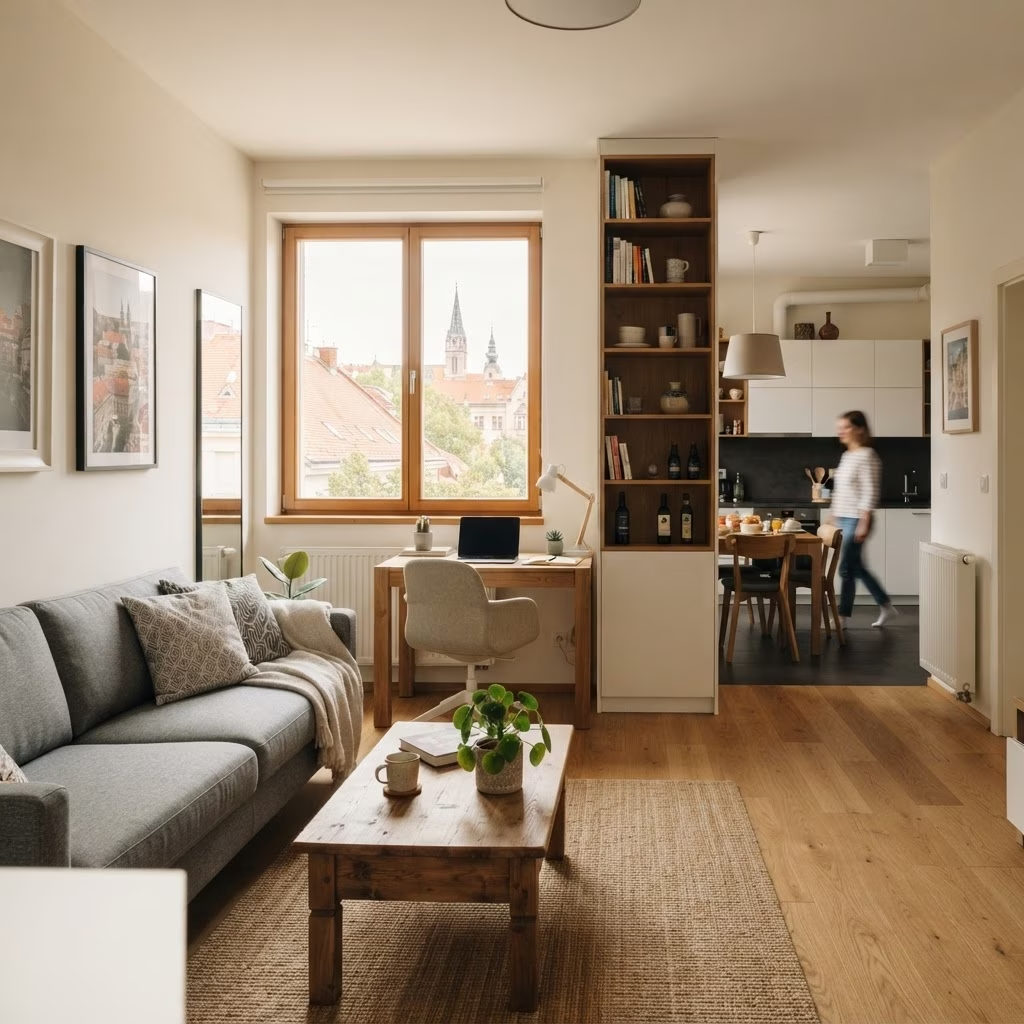
An apartment in Zagreb, for example, may have strong long-term rental demand because of its proximity to business districts, universities, public transport and everyday amenities.
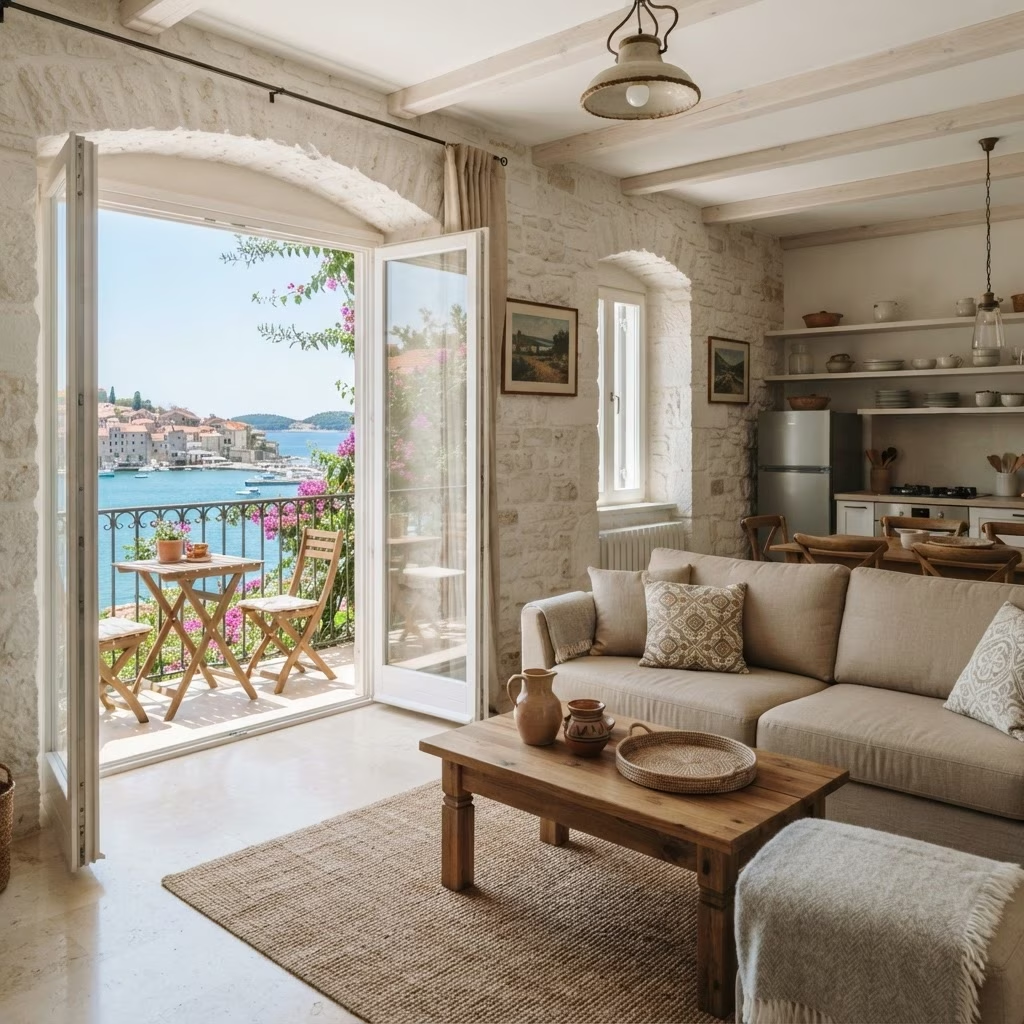
An apartment in a popular coastal destination may have a completely different economic profile. Its tourist rental potential may depend on proximity to the sea, beaches, the town centre, restaurants, attractions and transport connections.
But the distinction is not always straightforward.
A property in a tourist destination may also have year-round demand if it is located in an area where local residents live, people work or students study. Conversely, a coastal property that looks ideal for tourists may have limited demand from long-term tenants.
This is why location should be evaluated through the type of demand it attracts, not simply through its popularity as a tourist destination.
Higher revenue does not necessarily mean higher profit
One of the most common mistakes when comparing the two models is focusing on gross revenue.
For example, an apartment rented for €150 per night during the high season may initially appear much more attractive than an apartment generating €900 per month from a long-term tenant.
But tourist rental needs to be evaluated across the entire year.
The annual income needs to account for cleaning, maintenance, platform or management fees, utilities, furnishing, periods without guests and other operating costs. Long-term rental has a different cost structure, while income is generally more consistent.
The more useful question is therefore:
What is the net annual income after all costs?
That figure can then be considered in relation to the total amount invested in the property.
What type of property works for each model?
Different rental models create different priorities when choosing a property.
For long-term rental, important characteristics may include:
a functional floor plan
number of bedrooms
proximity to public transport
schools, universities and employment centres
shops and everyday amenities
parking
building and infrastructure quality
heating and cooling costs
For tourist rental, factors may include:
attractiveness of the destination
proximity to beaches or attractions
terrace, balcony or views
interior design and presentation
air conditioning
parking
capacity for several guests
convenient access and transport connections
This means that when buying an investment property, the question should not only be “How many square metres can I afford?”, but also “Who will want to rent this property?”
Seasonality is one of the biggest challenges of tourist rental
Tourist rental is particularly sensitive to seasonality.
A property may have very strong demand during a few summer months and significantly fewer bookings during the rest of the year. This means that owners need to think about the entire calendar year, rather than focusing only on the most profitable months.
One way to reduce seasonality can be to target different groups of guests – for example, tourists during the main season and business travellers or longer-stay guests outside it. Whether this works depends heavily on the location and characteristics of the property.
Long-term rental does not offer the same seasonal upside, but its lower volatility can be part of its appeal.
How much time do you want to invest in the property?
Financial return is not the only consideration.
Tourist rental can require the owner to effectively run a small hospitality operation. Bookings, pricing, guest communication, cleaning, maintenance and reviews all require attention.
With long-term rental, most activity is concentrated around finding a tenant, arranging the tenancy and dealing with maintenance when necessary.
Two properties with a similar purchase price can therefore have a very different time cost.
For someone who lives close to the property and wants to manage it actively, tourist rental may be practical. For an owner living in another city or country who wants minimal operational involvement, long-term rental may be more convenient – although professional property management can also make tourist rental possible from a distance.

What if you want to keep both options open?
Buying an investment property does not necessarily mean committing permanently to one rental model.
A well-located property may change its purpose over time. An apartment that is rented to tourists for several years could later be converted to long-term rental, for example.
This makes flexibility an important consideration when buying.
A well-designed apartment in a location with demand from both tourists and local residents can offer more than one possible strategy. That can be valuable if market conditions, personal circumstances or rental regulations change.
Owners should always check the current legal, tax and local requirements applicable to both tourist and long-term rental, as these rules can change over time.
So, which rental model should you choose?
There is no universal answer.
Long-term rental tends to fit an investment strategy focused on predictable income, lower operational involvement and consistent residential demand.
Tourist rental can be attractive when a property benefits from strong visitor demand, good occupancy potential and features that guests value – but it also comes with greater operational involvement and exposure to seasonality.
The most useful way to evaluate an investment is therefore to consider the combination of property, location, demand, costs and management.
A good investment property is not necessarily the one with the highest possible rental price. It is a property whose location and characteristics match the demand, while its expected income and costs make sense relative to the total investment.
On Loko, you can search properties by location, price, size and other characteristics and compare different options before making a purchase decision. Whether you are considering long-term tenants, tourist guests or a property that keeps both options open, the first step is finding a property that fits your investment strategy.