Ground Floor or Top Floor Apartment – What to Consider When Buying
Ground floor or top floor? Explore the advantages and drawbacks, from privacy and noise to damp, the roof, temperature and building maintenance.
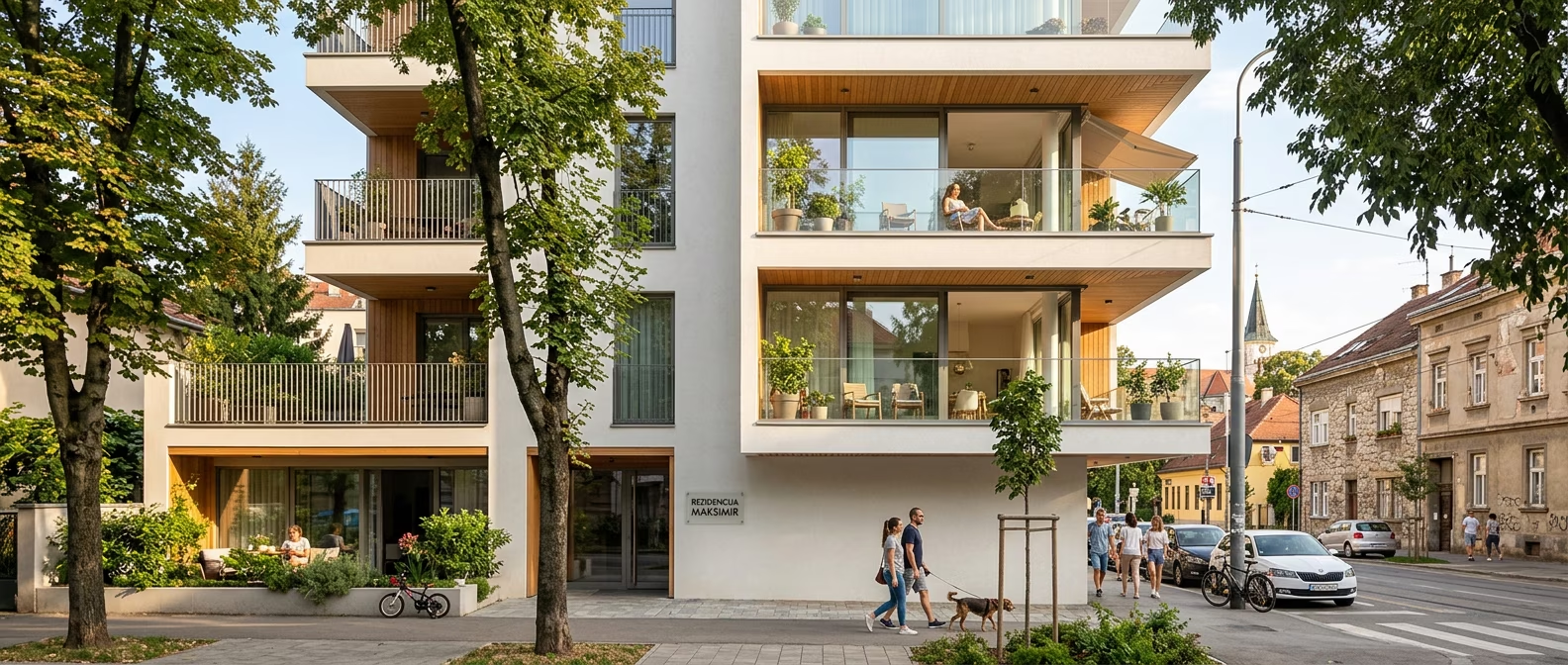
When buying an apartment, the floor is one of those details that can easily be taken for granted. A higher-floor apartment may offer more light and better views, while a ground-floor property can provide easy access and a stronger connection to outdoor space.
But the differences between a ground-floor and top-floor apartment go much further than that.
Ground-floor properties can be more exposed to noise, reduced privacy and damp, while top-floor apartments require particular attention to the condition of the roof, thermal insulation and indoor temperatures. At the same time, the quality of the building itself can make these differences much less significant.
So the question is not simply “Is a ground floor or top floor better?”
It is: “How does this particular apartment sit within this particular building, and what does that mean for everyday life?”
Ground floor: easy access, but less privacy
One of the clearest advantages of a ground-floor apartment is accessibility.
There are no stairs to climb, and a lift being out of service has little impact on everyday life. This can be particularly useful for families with young children, people with reduced mobility or simply anyone who values easy access.
A ground-floor apartment can also be particularly appealing when it comes with a private garden, terrace or direct access to green space.
But being close to outdoor areas can also have disadvantages.
Windows on the ground floor are often closer to pedestrians, building entrances, parking areas or shared courtyards. This can mean more noise and less privacy, particularly when the apartment faces a busy street or a frequently used communal area.
Two ground-floor apartments in the same building can therefore offer very different living experiences.
Privacy and security
Privacy is one of the characteristics that is difficult to assess from listing photographs alone.
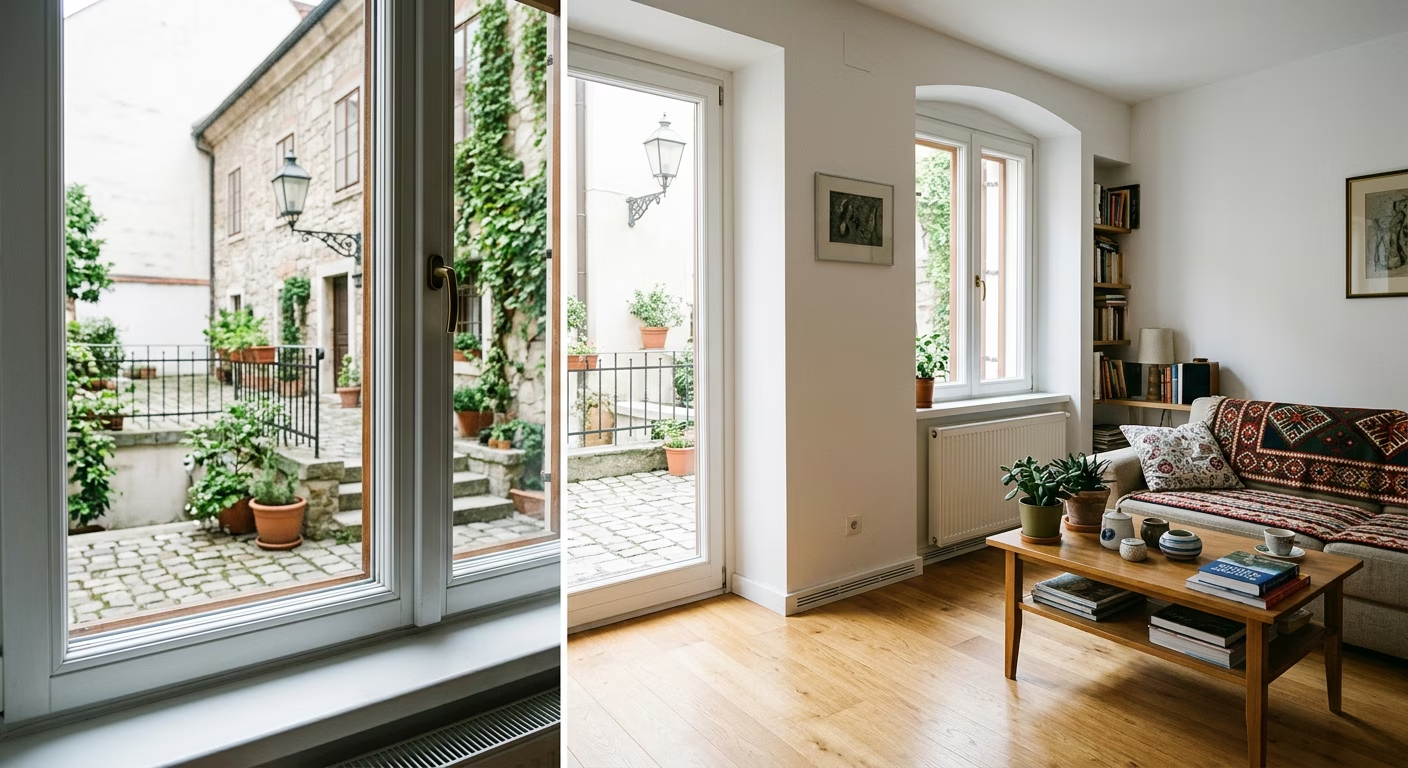
With a ground-floor apartment, it is important to consider where the windows are located and how exposed they are to people outside. An apartment facing a quiet internal courtyard may feel completely different from one with windows directly overlooking a pavement.
The same applies to entrance doors, terraces and private gardens.
A ground-floor apartment is not automatically less secure, but it is physically more accessible from outside. Window and door positions, as well as the security measures in place, may therefore matter more than the floor itself.
This is one reason why the position of the apartment within the building can be just as important as the address.
Damp is something worth taking seriously
Damp deserves particular attention in ground-floor apartments.
Being closer to the ground can increase exposure to moisture problems if waterproofing, drainage or other protective elements of the building are not in good condition. Signs can include stains, mould, unpleasant smells or damage to walls and flooring.
But not every ground-floor apartment has a damp problem.
A well-designed and properly maintained building can have a completely dry and comfortable ground-floor apartment. Conversely, moisture problems can occur elsewhere in a building as well.
The important thing is therefore to establish the actual condition of the specific apartment and building, rather than assuming that every ground-floor property is problematic.
Top floor: views and privacy, but the roof matters
Top-floor apartments often have qualities that buyers particularly value.
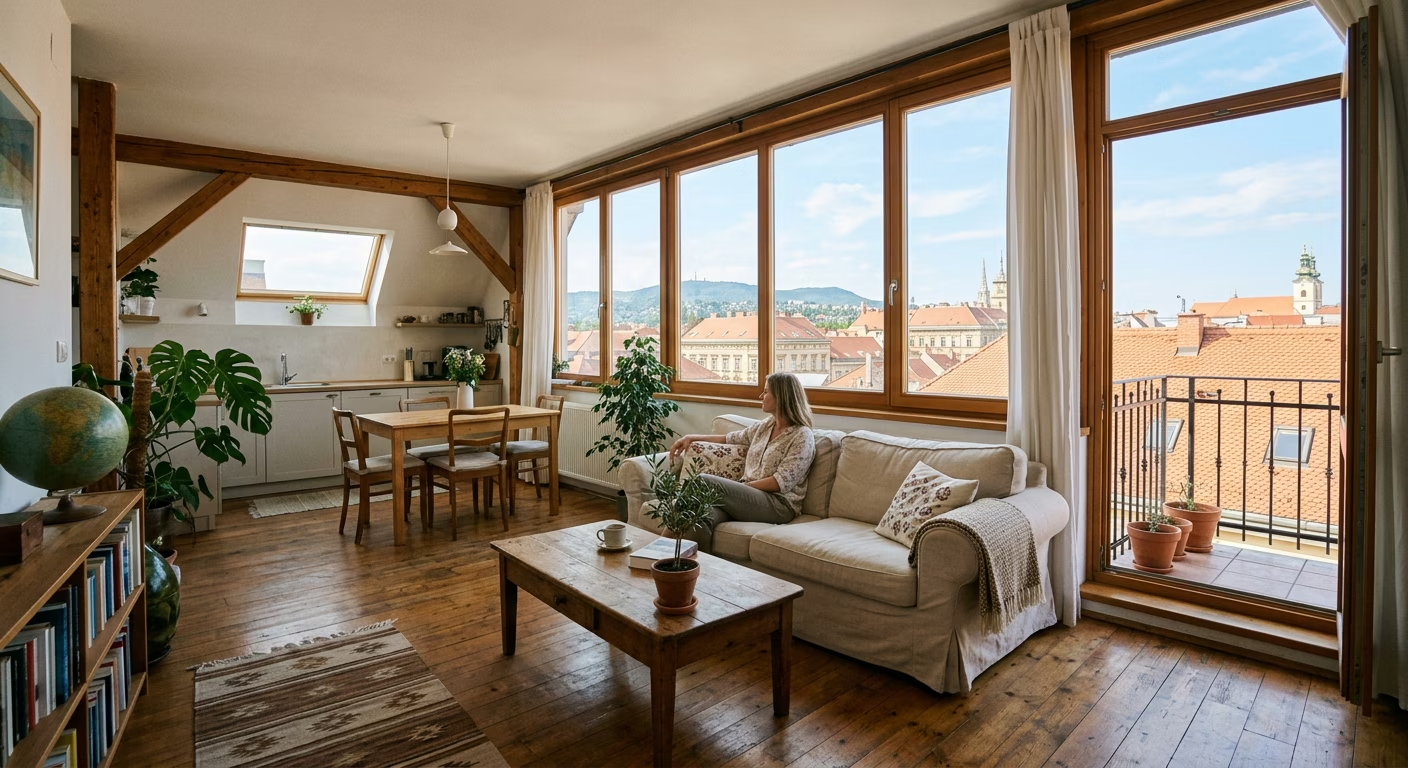
Being higher up can mean better views, more daylight, fewer direct views from neighbours and greater privacy. Where there are no nearby buildings blocking the outlook, the difference can be significant.
But a top-floor apartment has one important characteristic: the roof is directly above it.
This means the condition of the roof, flat roof or roof terrace can have a direct impact on the quality of the apartment.
Water penetration can cause damage to ceilings and walls, while poor thermal protection can contribute to overheating in summer and heat loss in winter.
Under Croatia's Building Management and Maintenance Act, the roof structure, roof covering and shared terraces are among the common parts of a building. The legislation also provides for the maintenance and necessary repairs of these shared elements through the building's management and reserve-fund system.
This is why buyers of top-floor apartments should look beyond the interior.
It is important to understand the condition of the entire roof.
Summer and winter can reveal the difference
Temperature is another important consideration.
A ground-floor apartment may receive less direct solar heat, but it can feel colder if it sits above an unheated space or if the floor is poorly insulated.
A top-floor apartment can have the opposite issue. If the roof is directly above the apartment and thermal insulation is inadequate, the property may become significantly warmer during summer. Poor insulation can also increase heat loss during winter.
An energy performance certificate can provide useful information. Croatian regulations require an energy certificate for buildings or individual parts where applicable, and the certificate must be made available to prospective buyers.
However, the energy rating is not the whole story.
Orientation, glazing, shading, air conditioning, window quality and the condition of the building envelope can all influence the actual living experience.
A view can have real value
One of the most appealing features of a top-floor apartment is the view.
A view of the sea, greenery, a city skyline or open space can be one of the characteristics that makes buyers willing to pay more.
But a view should also be considered in terms of how permanent it is.
If there is undeveloped land in front of the building, today's open outlook may not remain unchanged. Future development and planning decisions can affect the view, amount of daylight and privacy.
The value of a view is therefore also connected to its long-term permanence.
A lift can change the equation
For a top-floor apartment, the availability and condition of a lift can be particularly important.
A fourth-, fifth- or sixth-floor apartment without a lift may not bother some buyers. For others, it can be a significant disadvantage, particularly when carrying children, shopping, bicycles or other heavy items.
If the building has a lift, its condition, maintenance and associated costs are also worth considering.
With a ground-floor apartment, the situation is reversed: the lift may have little relevance to everyday use.
This is another example of why there is no universally “best” floor.
The right choice depends partly on who will be living in the property.
Noise is not always where you expect it
Noise is another factor that can surprise buyers.
Ground-floor apartments can be exposed to street noise, entrances, courtyards or parking areas. But upper floors can also be noisy if the property faces a busy road, tram line, restaurant or another source of noise.
Top-floor apartments may have another potential source of noise: technical equipment on the roof, ventilation, air-conditioning systems or other building equipment, where present.
This is why it can be useful to view a property at different times of day. An apartment that feels quiet on a weekend afternoon may feel very different on a weekday morning.
The building's reserve fund and condition matter
When buying an apartment, you are not buying only the four walls.
You are also acquiring a co-ownership share in the building and participating in its maintenance. This can be particularly important for ground-floor and top-floor apartments because both positions can be more sensitive to the condition of specific building elements.
For a ground-floor apartment, attention should be paid to foundations, waterproofing, basement areas and external walls.
For a top-floor apartment, the roof, roof insulation and shared terraces or other elements above the apartment become particularly important.
Croatia's Building Management and Maintenance Act defines common building parts and regulates regular and extraordinary maintenance, including the roof structure, roof covering, façade and building envelope.
The condition of the building's reserve fund and any planned works can therefore be just as important as the condition of the apartment itself.
So, which is better – ground floor or top floor?
The answer depends largely on your lifestyle.
A ground-floor apartment can be attractive if easy access, a garden or terrace, and independence from the lift are important to you. Privacy, noise, damp and security may require additional attention.
A top-floor apartment can offer more privacy, natural light and better views, with no immediate neighbours above. But the condition of the roof, thermal performance, temperature and lift access become more important.
Both can be excellent choices – under the right circumstances.
The building matters more than the floor number
When comparing two apartments, it is easy to focus on the floor and overlook everything else.
A well-maintained building with a sound roof can make a top-floor apartment extremely comfortable. Good waterproofing and well-designed surroundings can make a ground-floor apartment equally attractive.
Conversely, building-related problems can outweigh the advantages of any particular floor.
The right approach is therefore to consider the whole context: location, orientation, daylight, noise, building condition, roof or foundations, reserve fund, lift, maintenance costs and the quality of the apartment itself.
And, of course, the documentation. The Croatian Government recommends checking the land registry extract, the relevant construction documentation, the use permit and the energy certificate when purchasing property.
In the end, perhaps the most important question is not whether you are buying a ground-floor or top-floor apartment.
It is whether the apartment suits the way you want to live and whether the building can provide good long-term living conditions.
On Loko, you can search for properties by location, price, size and other characteristics and compare different apartments – including ground-floor and higher-floor properties – before deciding which position works best for you.