What Does It Mean When a Property Has a Mortgage and Can You Buy It Safely
A property with a mortgage is not necessarily risky to buy. Learn what a mortgage means, how it can be cleared during a sale and what to check before buying.
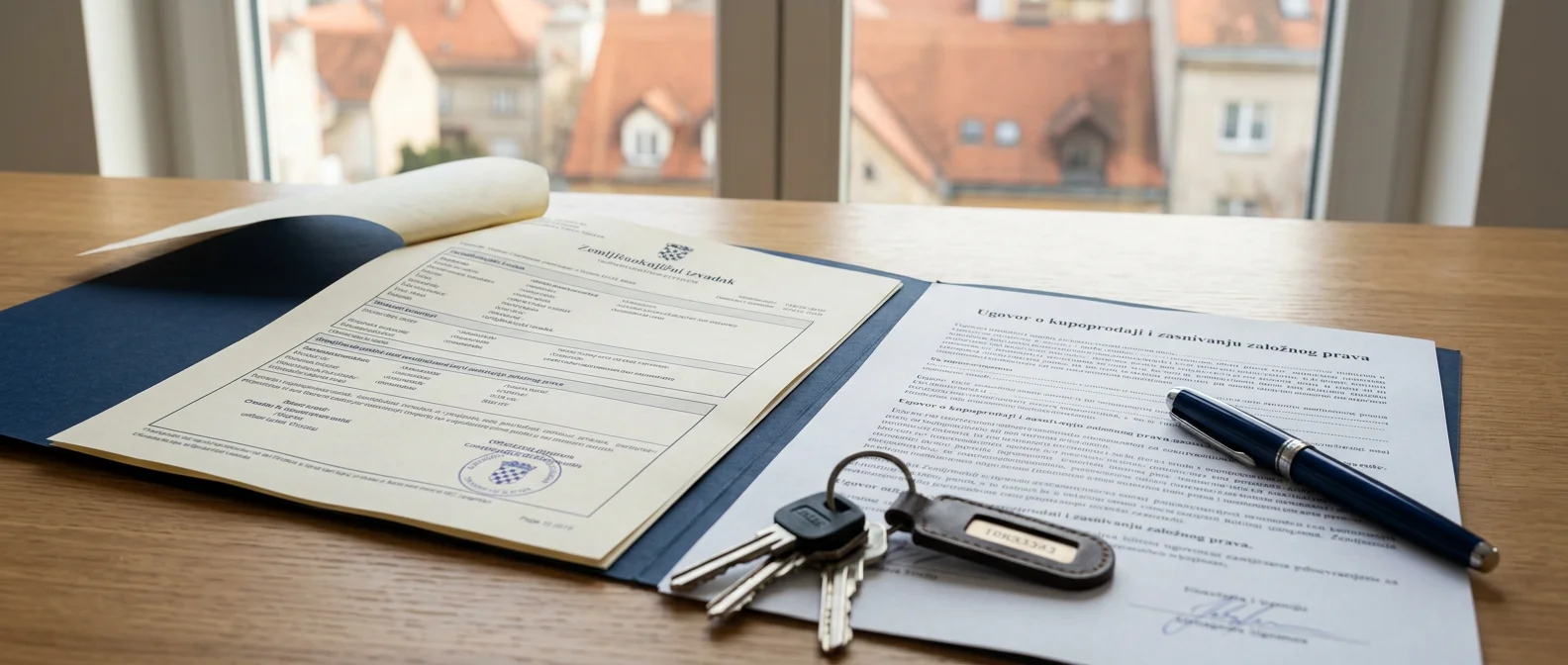
When a buyer sees a mortgage registered against a property in the land register, the immediate reaction is often:
“Is this property actually safe to buy?”
A mortgage does not automatically mean that a property is problematic or that it cannot be sold. Many properties are bought and sold while a mortgage is registered against them, for example because the current owner used a mortgage loan to purchase the property.
What matters is understanding what the mortgage secures, who the mortgage creditor is and how the mortgage will be dealt with as part of the sale.
Under Croatian property law, a mortgage registered against a property is extinguished by removing it from the land register. Simply repaying the underlying debt does not automatically remove the mortgage registration.
What exactly is a mortgage?
A mortgage is a security interest in property that secures a particular debt.
The most common example is a home loan. A bank provides financing to purchase a property and registers a mortgage over that property as security for the loan.
If the borrower is making the required repayments, the existence of a mortgage does not by itself indicate a problem with the property. It simply provides security to the creditor while the debt remains outstanding.
The mortgage is registered in the land register, which means that a prospective buyer can see it when checking the property's registered status.
This is one reason why the land register is so important when buying property: it records ownership as well as certain rights and encumbrances affecting the property.
Can a property with a mortgage be sold?
Yes.
The existence of a mortgage does not prevent an owner from selling a property. However, the transaction needs to clearly establish how the existing mortgage will be dealt with.
A common situation is that the owner sells the property and uses part of the purchase price to repay the outstanding loan to the bank. Once the debt has been settled, the bank provides the documentation required for the mortgage to be removed from the land register.
The important point is that the buyer should not simply assume that the mortgage will somehow “be taken care of” after completion.
The mechanism for clearing the mortgage should be understood and contractually addressed before the buyer makes payment.
This is particularly important when part or all of the purchase price will be used to repay the existing loan.
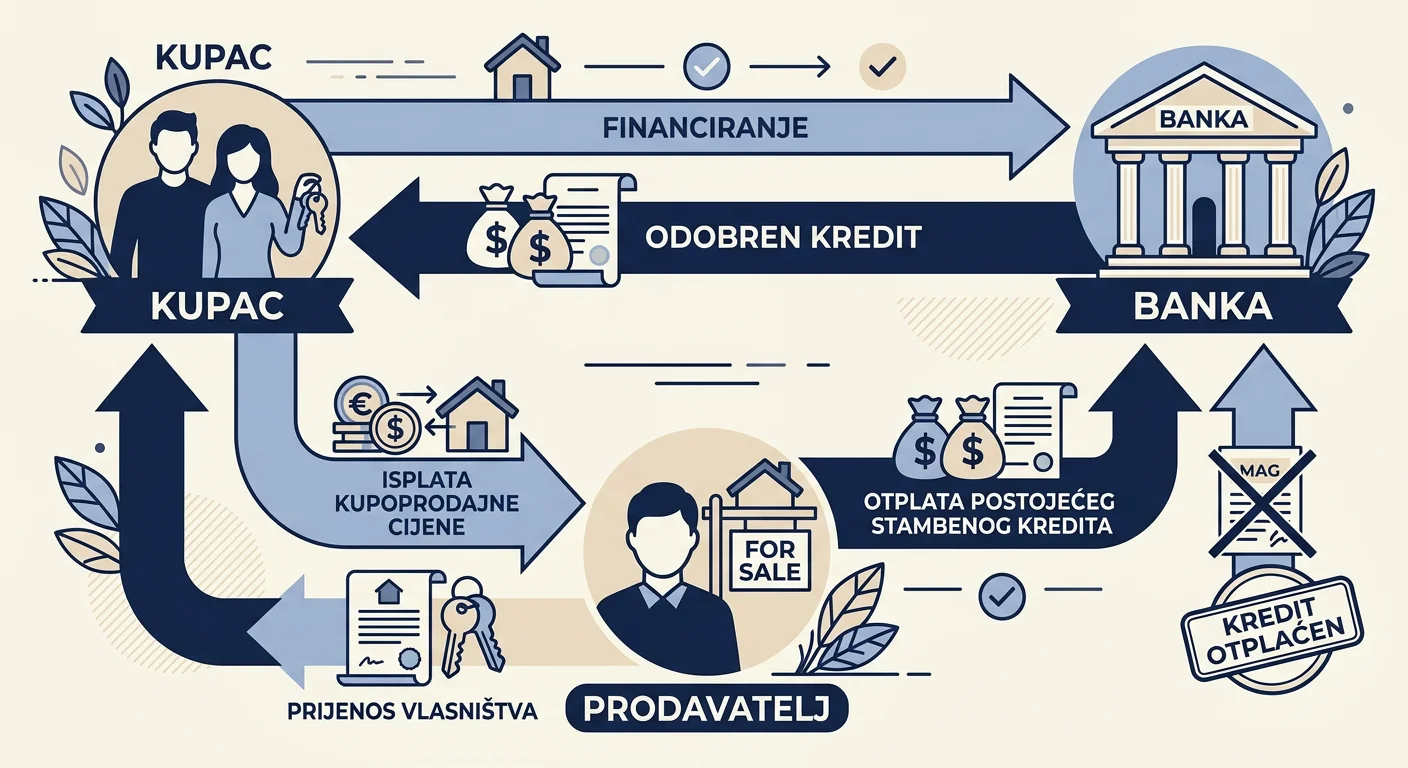
What happens to the mortgage when you buy the property?
A common structure is for the existing debt to be repaid from the sale proceeds.
For example, imagine a property being sold for €250,000 with a mortgage securing an outstanding debt of €100,000.
The buyer should not simply transfer the full €250,000 to the seller on the assumption that the seller will then repay the bank.
Instead, the transaction may provide for the relevant portion of the purchase price to be paid directly to the bank to settle the debt, with the balance paid to the seller. The exact structure depends on the specific transaction, the bank and the contractual arrangements.
Once the debt has been settled, the mortgage needs to be removed from the land register.
This is one reason why a purchase involving an existing mortgage should not rely solely on an informal agreement between buyer and seller. The relevant professionals should be involved, and the bank's procedure for settling the loan and issuing the necessary documentation should be confirmed in advance.
A mortgage is not the same as enforcement
It is important to distinguish a mortgage from other registrations or notices that may indicate a more complicated situation.
A mortgage is a security interest securing a debt. The mere existence of a mortgage does not mean that enforcement proceedings have been started or that the property is about to be forcibly sold.
However, if the land register also contains other entries – such as an enforcement notice, litigation notice or additional encumbrances – the situation may be considerably more complex.
That is why seeing the word “mortgage” is not enough to determine whether a property is safe or unsafe to buy.
The entire land register extract and all relevant entries need to be considered.
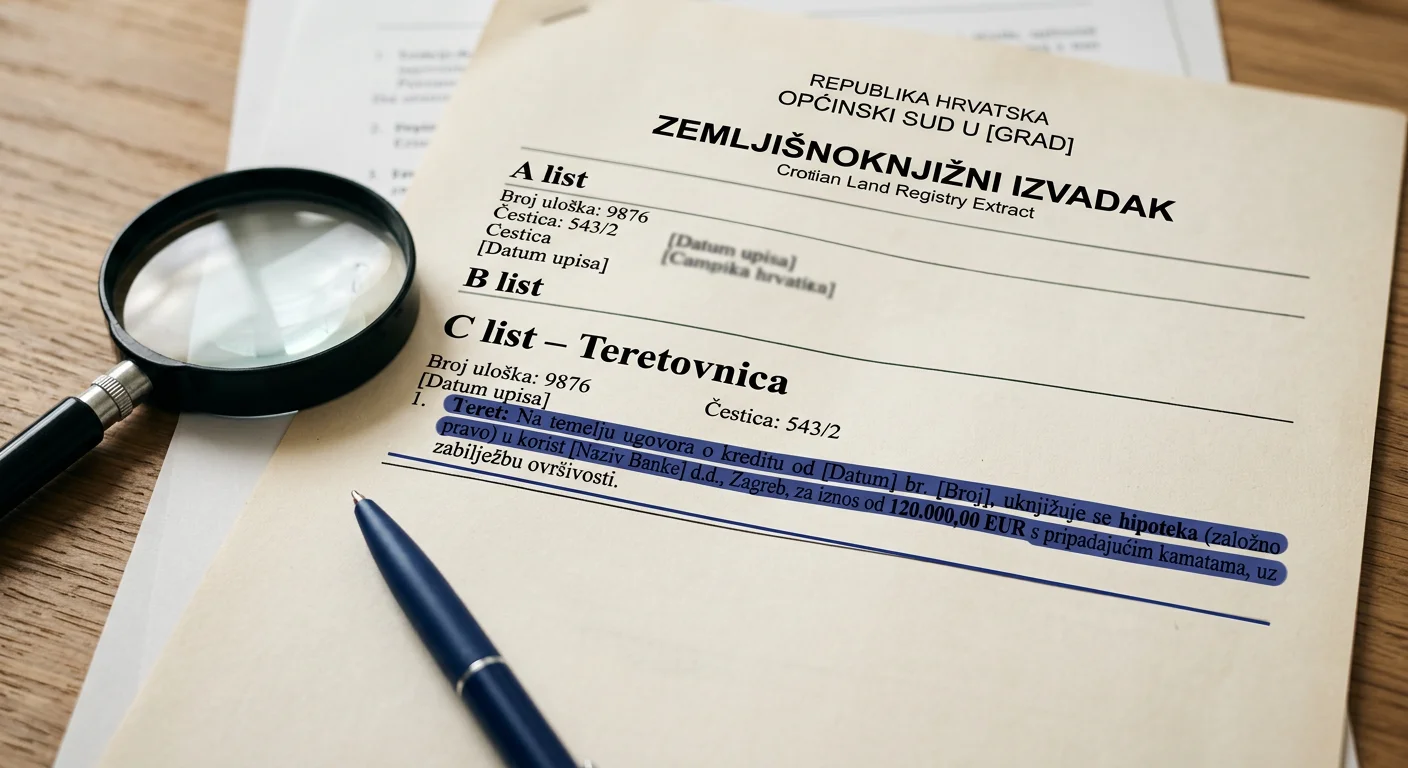
Why can the priority of registrations matter?
Where several rights are registered against a property, their order of priority can also be important.
The land register records the order in which rights are registered, and that order can affect the position of creditors.
This is why a property with a single straightforward mortgage is different from one with several mortgages or additional encumbrances.
If the land register contains multiple entries, it is not enough to know how much the owner owes the bank. It is necessary to understand which rights and encumbrances are registered, who they belong to and how they will be dealt with.
In more complicated situations, legal due diligence can be particularly important to the security of the transaction.
What if the loan has already been repaid?
This is a situation that can confuse buyers.
The owner may have already repaid the loan while the mortgage is still registered in the land register.
That does not necessarily mean that the debt still exists.
Under Croatian property law, a mortgage does not simply disappear because the underlying debt has been repaid. The mortgage itself needs to be removed from the land register.
It is therefore important to distinguish between:
“The loan has been repaid”
and
“The mortgage has been removed from the land register.”
These are related, but legally distinct, matters.
Can a buyer become the owner if there is a mortgage?
Ownership of Croatian real estate is acquired through registration in the land register when the relevant legal requirements are met.
However, a buyer needs to pay close attention to when and under what conditions the relevant registrations will take place.
If a buyer acquires property that remains subject to an existing mortgage, the change of ownership does not automatically make the mortgage disappear.
This is why the sale agreement should clearly address the seller's obligation to transfer the property free of any unwanted encumbrances, as well as the process for settling and removing the existing mortgage.
For these transactions, the precise wording of the contract and the order of payments can be particularly important.
What should you check before buying?
Finding a mortgage in the land register is not a reason to automatically walk away from the property.
But it is a reason to slow down and understand the situation.
In particular, the buyer should understand:
who the mortgage creditor is
how much debt remains, if any
whether there are multiple mortgages
whether other encumbrances or notices are registered
whether the mortgage will be removed before or as part of the ownership transfer
how the purchase price will be allocated
what documentation will be issued once the debt is settled
when and how the application to remove the mortgage will be submitted
whether there are other legal or land-register issues
These matters should be clarified before the buyer commits to the transaction, not after the money has been transferred.
Be particularly careful with the deposit
When a buyer pays a deposit, they are already entering into a legally significant relationship with the seller.
If the property has a mortgage, it is important to understand how the existing encumbrance will be dealt with before signing a preliminary agreement or sale contract.
A buyer should not assume that the fact that the bank is aware of the sale automatically protects their money.
The contractual structure should clearly establish what happens if the mortgage cannot be removed, what conditions apply to payment and what happens to the deposit if the transaction cannot proceed on the agreed terms.
For transactions involving significant amounts of money, it can be sensible to have a lawyer or another appropriately qualified legal professional review the documentation and agreement before signing.
When is a mortgage not a reason to walk away?
A mortgage is a common consequence of financing a property purchase with a bank loan.
If the situation is transparent, there is a clear process for settling the debt, the bank confirms the necessary steps and the contract clearly regulates the removal of the mortgage, the mortgage itself does not necessarily prevent a safe sale.
In other words, the issue is not necessarily the existence of a mortgage, but uncertainty about its status and how it will be dealt with.
The buyer should understand what they are purchasing, which encumbrances they will or will not take on, and under what conditions they will become the owner of the property without unwanted encumbrances.
A safe purchase starts with verification, not assumptions
A property with a mortgage can be purchased safely, but that safety does not come from a seller simply saying that “the bank will take care of everything”.
It comes from clear documentation, a verified land-register position, transparent arrangements with the mortgage creditor and a properly structured sale agreement.
One point is particularly important: repaying the debt and removing the mortgage are not the same thing. A mortgage registered in the land register is extinguished through its removal from the land register.
The existence of a mortgage is therefore not automatically a reason to avoid a property. It is, however, a reason to understand the full legal and financial structure of the transaction before buying.
On Loko, you can search for properties by location, price, size and other characteristics. Once you find a property that fits your needs, checking its documentation and land-register status is an important next step before making a purchase decision.